NONORARA01_Tsugaku
action · public

Introduction
NONORARA is an experimental body that creates exhibitions through movement, encounters, and records. “Tsugaku” begins from our own commuting routes.
NONORARA 01 Tsugaku is NONORARA’s first action-based exhibition, and also a collaborative experiment carried out under a very limited budget and real conditions. It does not begin from the premise of a fixed exhibition room. Instead, it starts from what we are already experiencing: commuting to school, moving through the city, living alone, life outside the classroom, and the ways in which artworks are carried. Through this project, we try to organize these processes into something that can be seen, recorded, and revisited.
This is not an exhibition that already has complete exhibition conditions. It is closer to a first full-process test run. Member collaboration, route planning, carrying artworks, temporary stops on site, photographic documentation, social media publishing, website guidance, and later archiving will be connected for the first time through this action. For NONORARA, what matters is not to first obtain a mature space or budget, but to let one action fully take place under limited real conditions.
The members of this project come from the earliest relationships formed when NONORARA began planning real actions in Kansai in early 2026. Considering the conditions for action, time, budget, and the possibility of collaboration, the first project begins with KUA members. KUA’s position within the city of Kyoto also makes “Tsugaku” a very concrete question. Those who live close to school may find it easier to maintain school life and the certification system, but their after-class life within the city may be compressed. Those who live farther away may have longer experiences of transportation, the city, and personal life, while their classroom life and school certification may become less stable.
In Japanese, “tsugaku” means the route by which students go to and from school. For us, it first refers to the bodily movement between leaving one’s room and arriving at school: walking, cycling, taking the train, taking the bus, taking a taxi, or switching between different means of transportation. Before a student arrives in the classroom, they have already entered their university life with their body, artworks, fatigue, hesitation, daily life, and many thoughts that are not recorded in the timetable.
The initial trigger for this project came from one member’s experience of long-distance commuting to school. This experience is not significant simply because of its distance, but because the movement itself contains hesitation about university, the city, where to live, and whether to continue studying. Similar states also exist among other members. Some live close enough to walk to school in one minute. Some ride bicycles. Some take the train. Some take the bus. Some take taxis. Some have left home for the first time and now live alone in Kyoto. Some do not put all their energy into school itself, but move between the city, nights, friends, money, artworks, and the rhythm of their own lives.
Therefore, “Tsugaku” is not a project about transportation, nor is it a conceptual summary of student life. It is a small entrance. We begin from the routes we pass through, choose, endure, and think through every day, and place artworks into those routes. The artworks are not first fixed inside an exhibition room. They are carried on the back, held in the hand, tied to bicycles, brought onto trains and buses, put down, packed away, and moved again. Especially within public transportation, the artworks temporarily become carried luggage itself. They are wrapped, compressed, placed beside the body or on luggage racks, appearing among passengers, vehicles, platforms, and routes in a state that is not fully on display.
Of course, we know this does not count as academic credit. But it is certainly part of our university life.
Participating Works
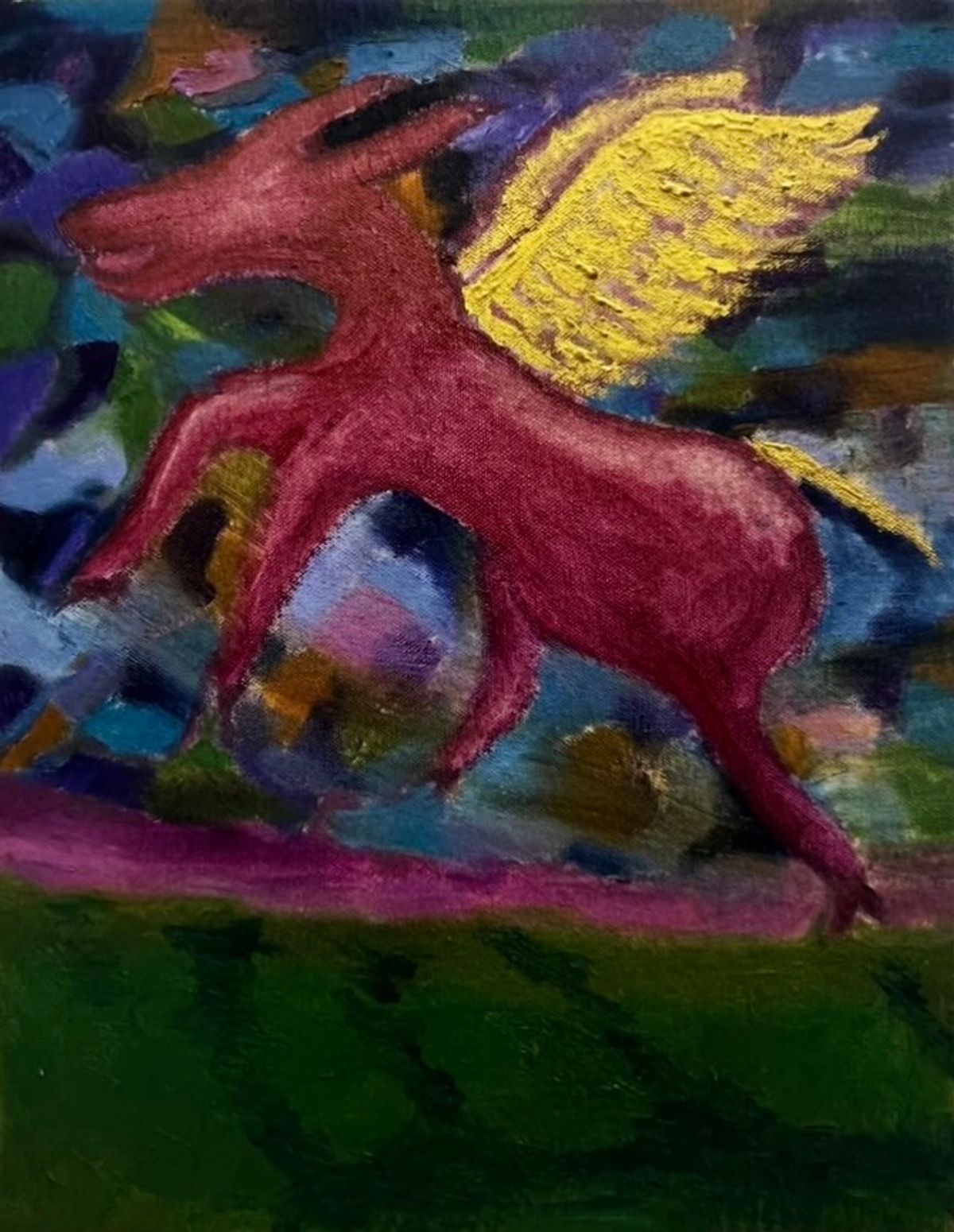
SORANOSUKE SHIMA
Untitled
2026 Oil on Canvas
35.0 × 27.0 cm
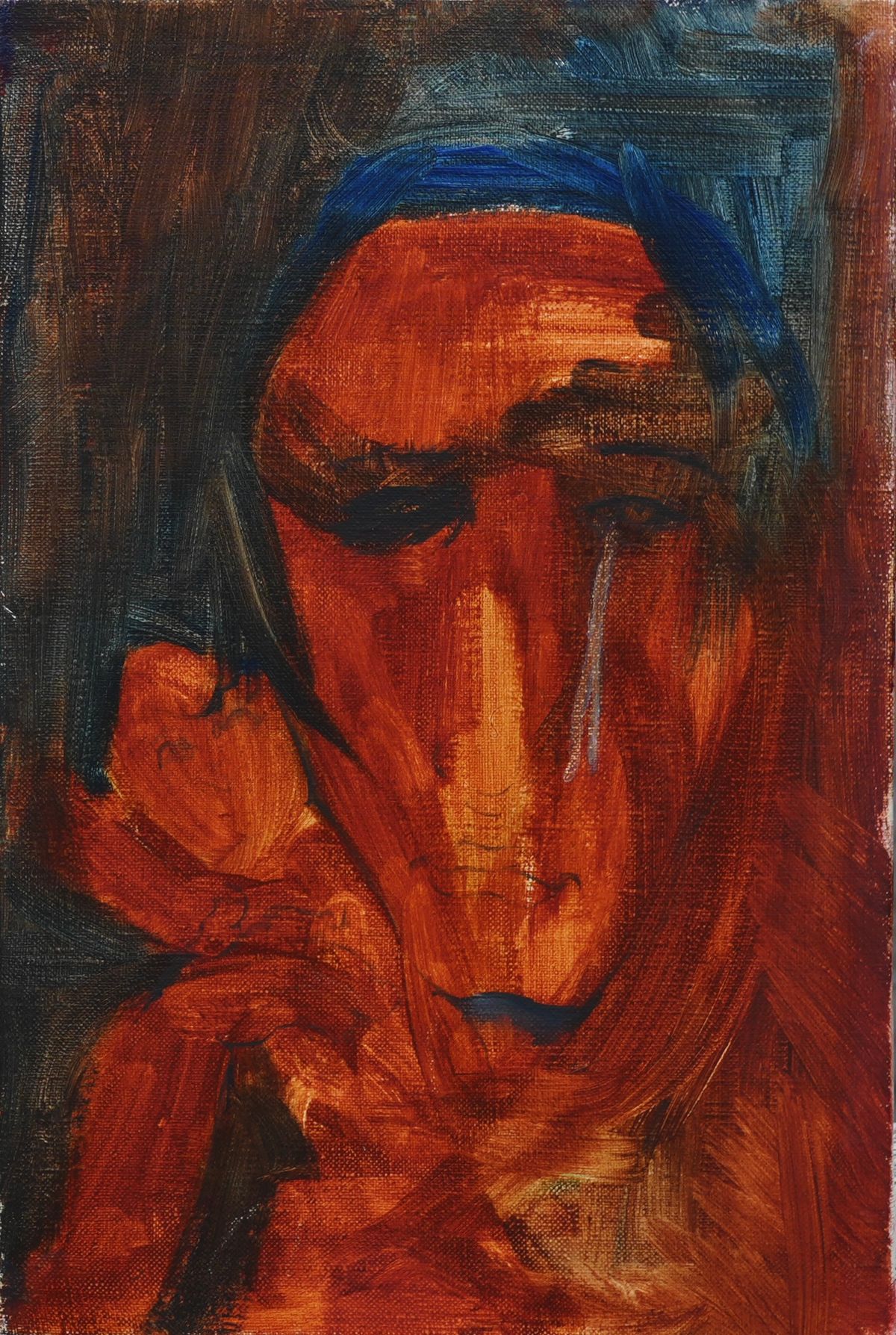
KISHIN TAIRA
「母子」
2026 Oil on canvas
33.3 × 22.0 cm
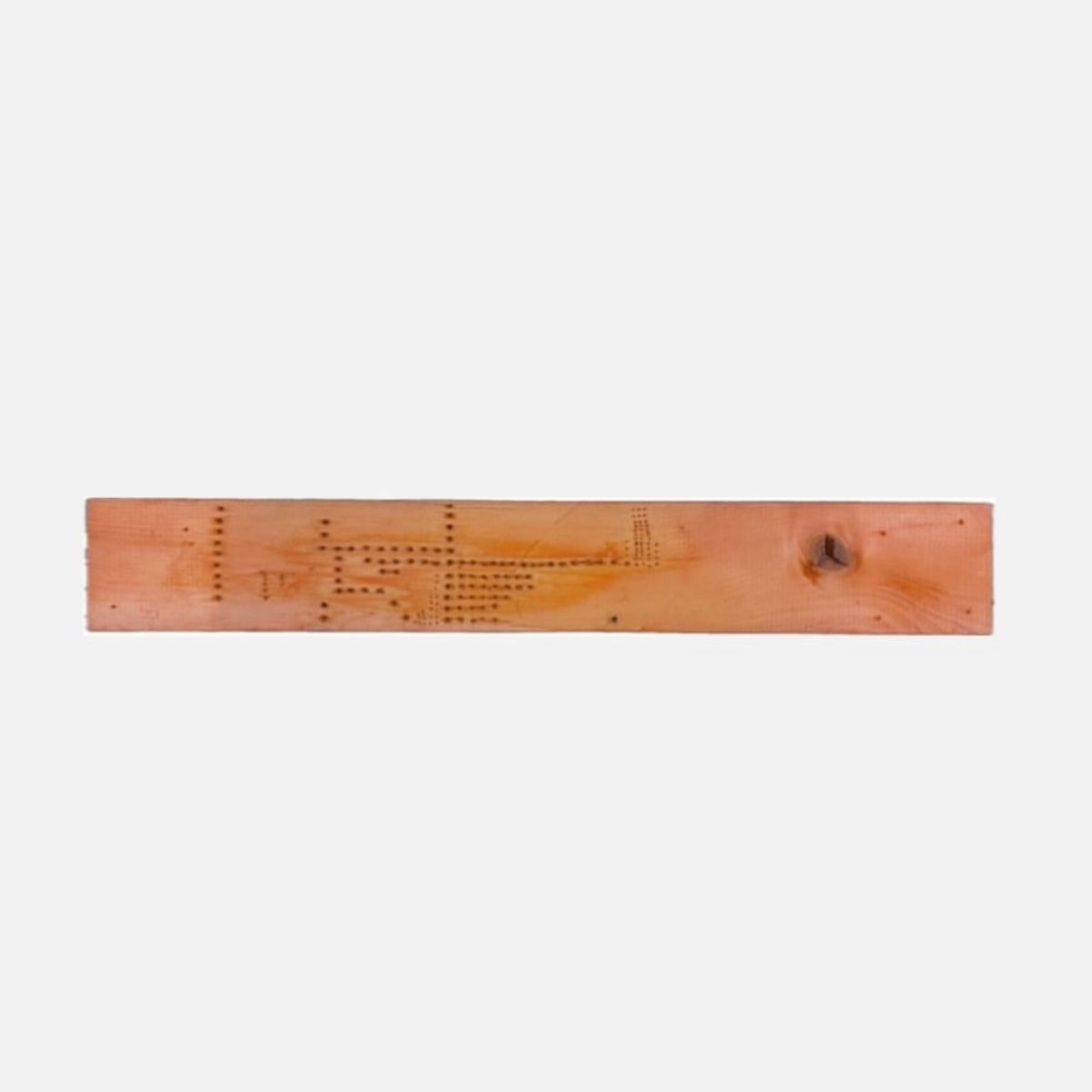
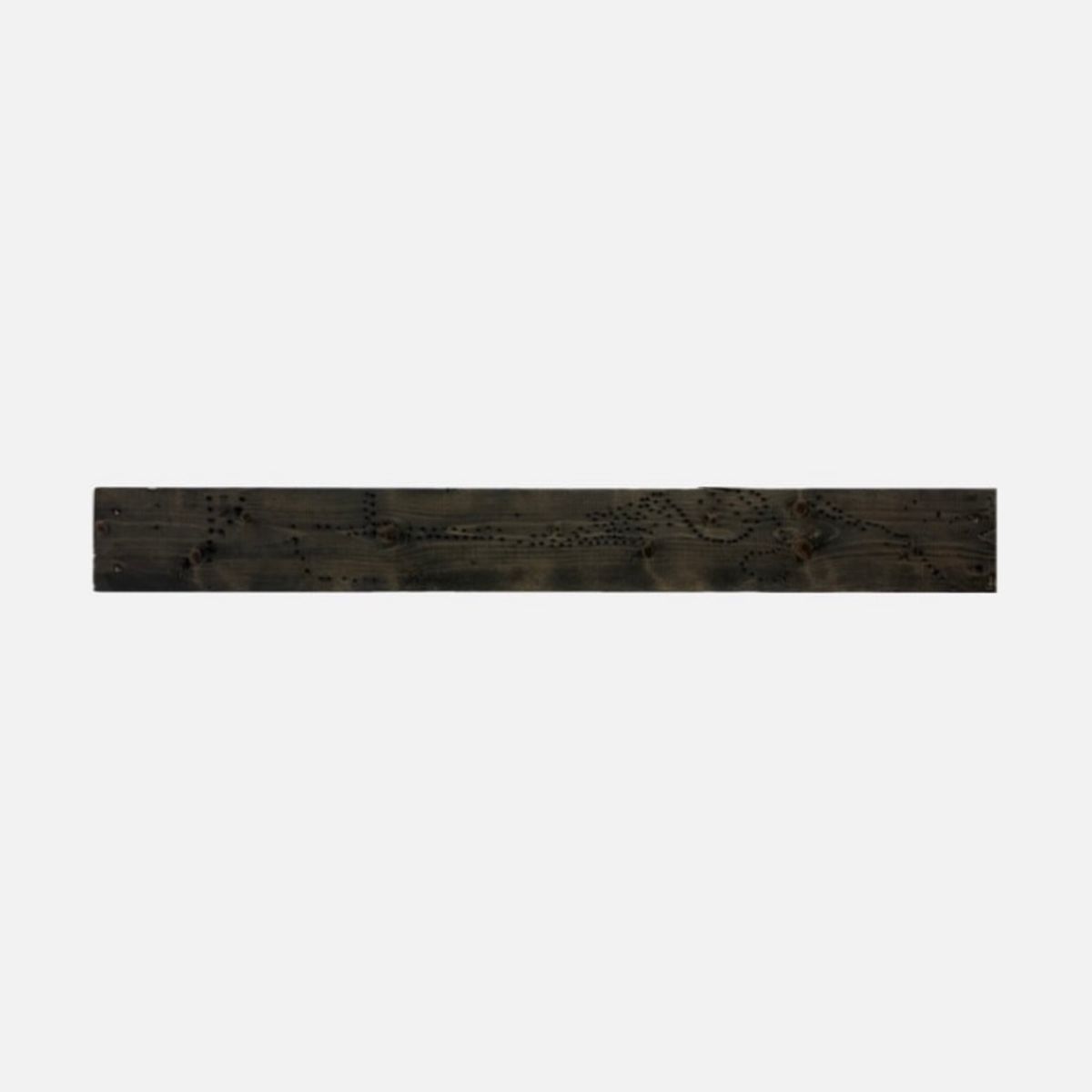
MASAYA KAWANO
「挨拶」
2026 Woodblock, ink, timber
Variable dimensions
MASAYA KAWANO
「瑕.2」
2026 Woodblock, ink, timber
Variable dimensions
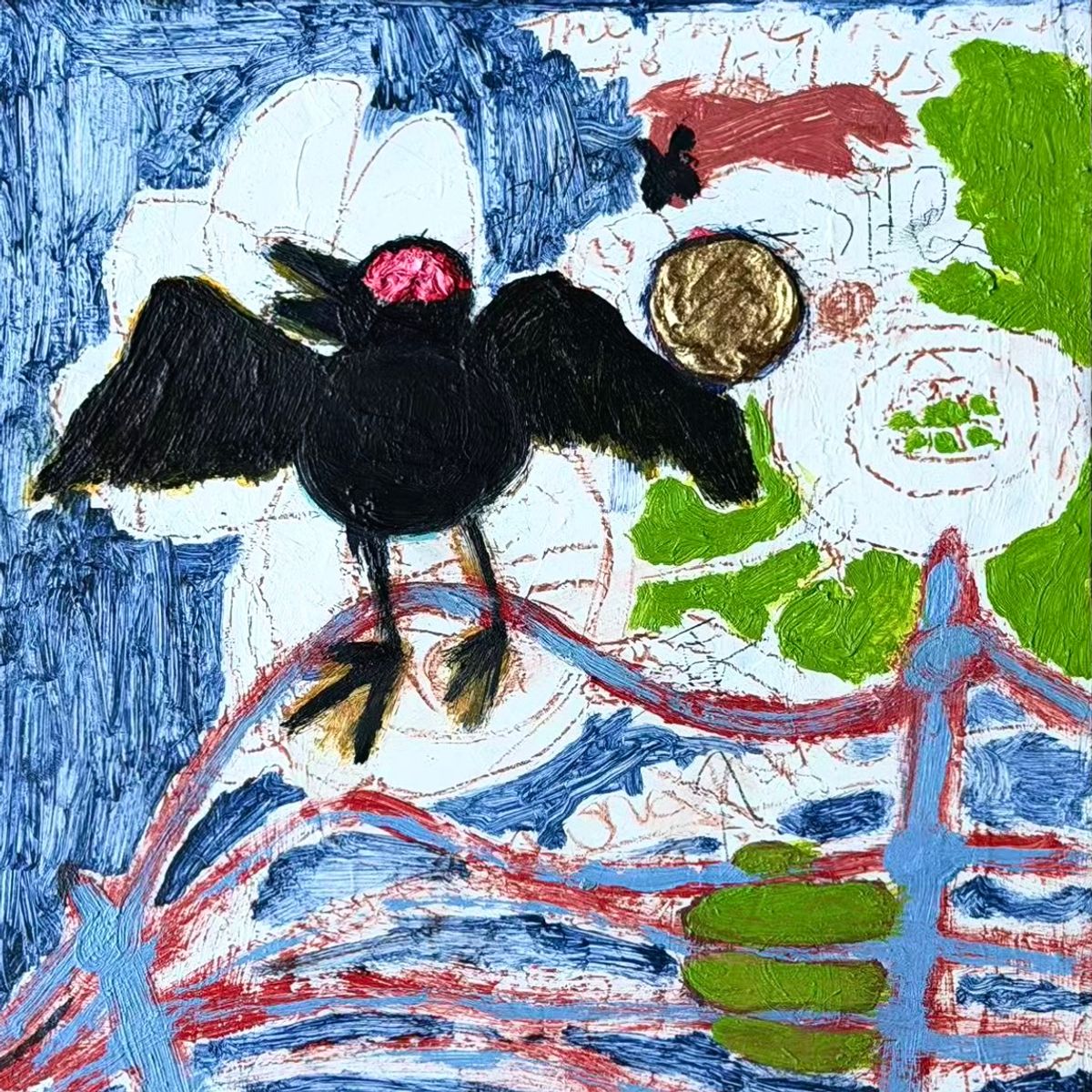
ZHENGYI SUN
Untitled
2026 Oil on canvas
20.0 × 20.0 cm
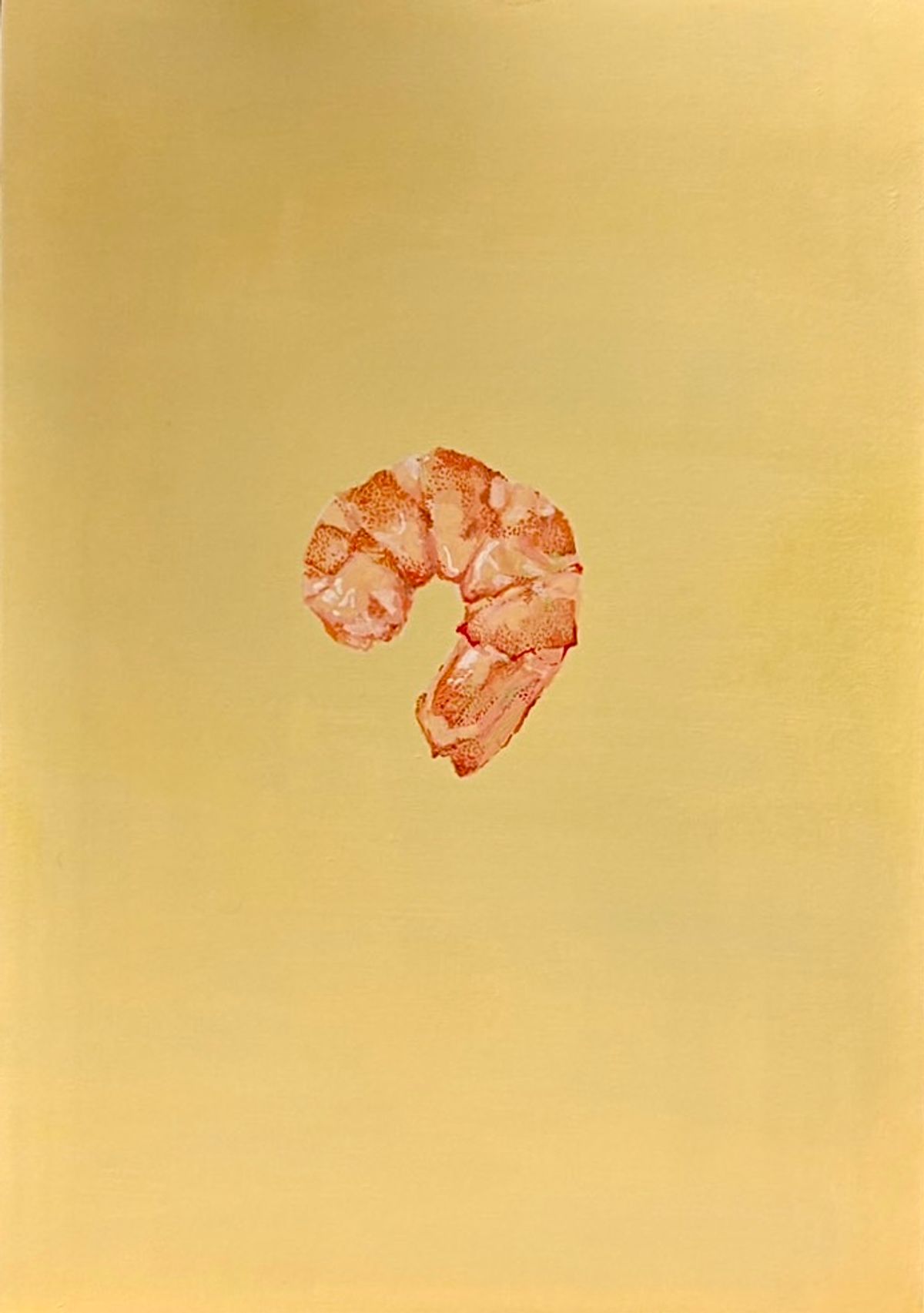
ITSUKI BANDO
「エビ」
2026 Acrylic on panel
22.7 × 15.8 × 4.1 cm
Route Guide
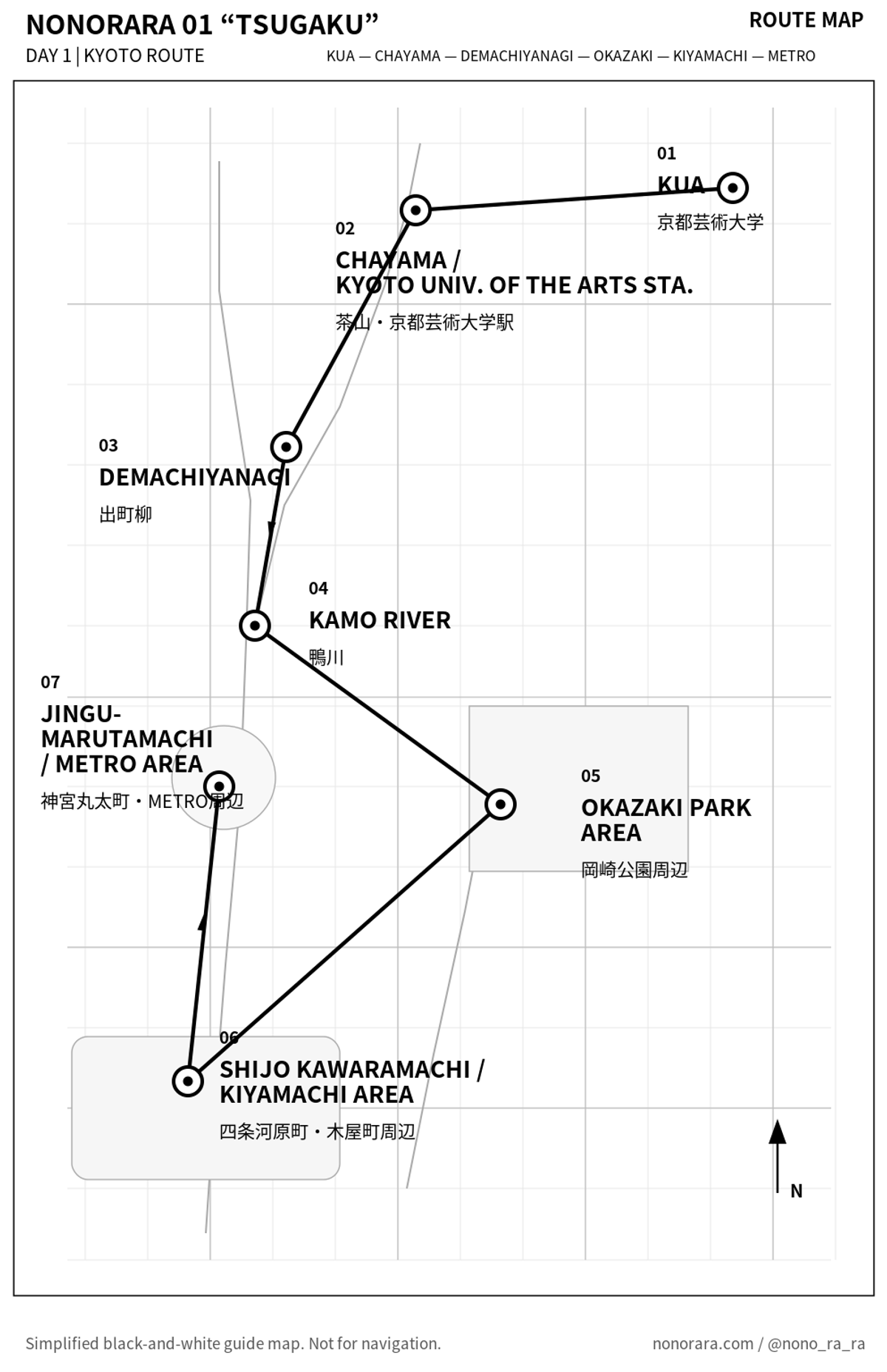
Swipe horizontally to view the two route maps
This project takes place over two days. The route and schedule may change depending on weather, transportation, pedestrian flow, and the condition of the artworks.
Day 1 is the Kyoto route. The route begins at KUA, passes through Chayama / Kyoto University of the Arts Station, Demachiyanagi, the Kamo River, and the Okazaki Park area, then continues to Shijo Kawaramachi / Kiyamachi, and reaches the Jingu-Marutamachi / METRO CLUB area at night. The day is expected to begin in the morning. After departing from the school, the route moves through the station area and the Kamo River section, stops for shooting around Okazaki Park, enters central Kyoto around the evening, and concludes at night. The main modes of movement include walking, walking with bicycles, and public transportation.
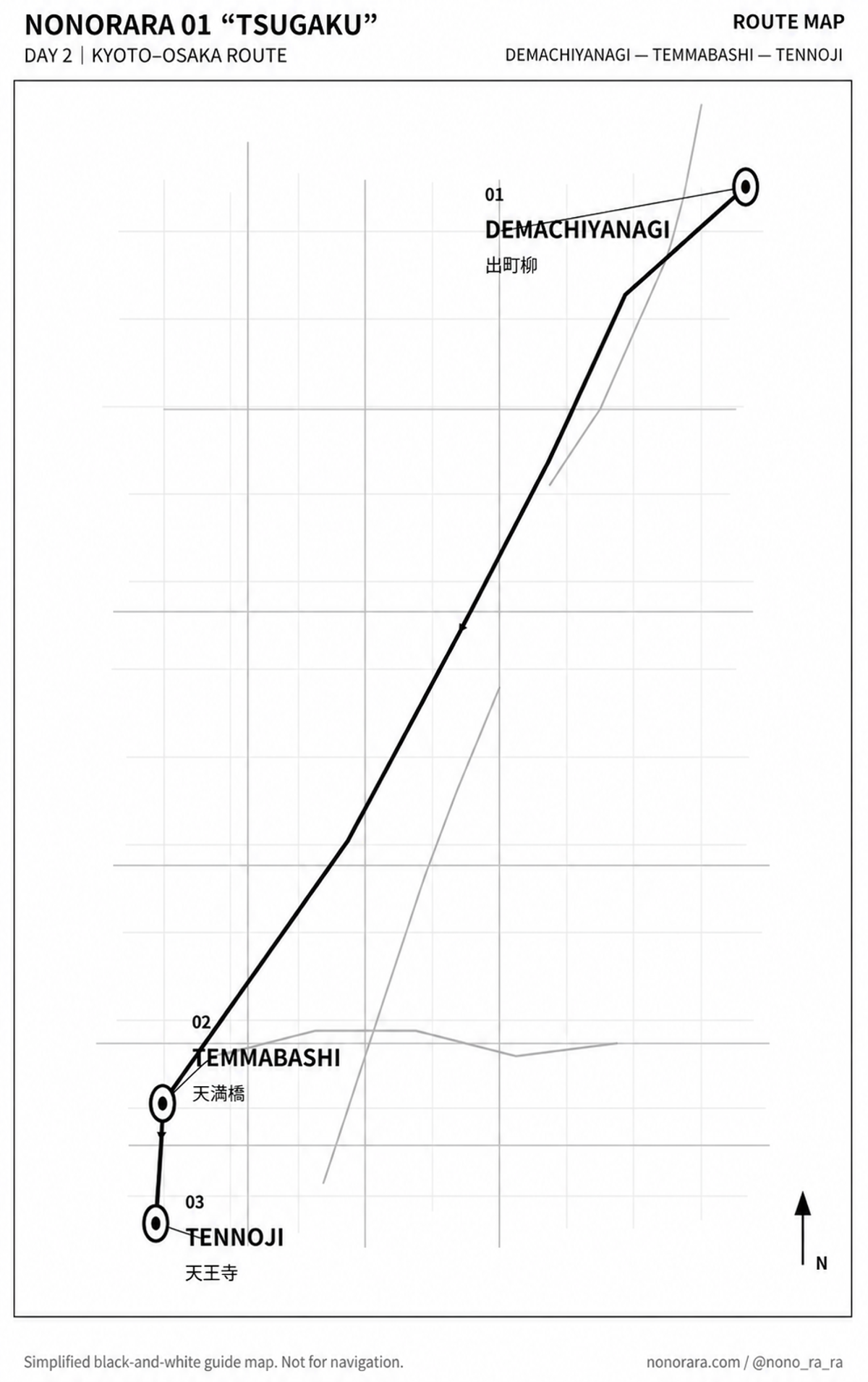
Day 2 is the Kyoto–Osaka route. The route departs from Demachiyanagi, enters Osaka via the Keihan Line, and stops around the Temmabashi and Tennoji station areas. The day is expected to begin around midday. The focus is on bringing the artworks into an intercity public transportation system, and continuing movement, display, and documentation within Osaka. The main modes of movement include the Keihan Line, Osaka Metro / JR and other public transportation, and walking.
Viewing & Display Method
“Tsugaku” is not an exhibition held in a fixed gallery space, and it does not have regular opening hours. Viewers can use the route maps on this page to understand the basic path of the two-day action. They may also encounter the works along the route, at stations, by the river, on the street, in public transportation, or in night spaces. Images and fragments from the project will be posted through NONORARA’s social media, and the completed records will later be organized into a follow-up archive.
The works in this project will not always appear in a fully displayed state. They will be carried on the back, held by hand, tied to bicycles, and brought onto trains and buses. At different points, they may be temporarily placed, photographed, packed away, and moved again. Display does not only happen when the works are set down. It also happens while they are being carried, protected, transferred, and placed again.
Within public transportation, the works temporarily become carried luggage itself. They may be wrapped, compressed, placed beside the body, between seats, or on luggage racks, forming a viewing site together with other passengers, vehicles, platforms, and urban routes. What viewers encounter is not a fully fixed exhibition, but a process in which the works continue to change their state along the commuting route.
Further Archive
This page serves as an action guide and digital exhibition guide published before the implementation of “Tsugaku.” After the Kyoto route on July 18 and the Kyoto–Osaka route on July 19 have been completed, NONORARA will prepare a second “Tsugaku” archive based on what actually occurred.
The subsequent archive will include on-site photographs, video footage, the actual routes taken, the changing condition of the works during movement, the division of roles among members, and the temporary adjustments, decisions, failures, chance encounters, and unforeseen situations that emerged during the action. It will not replace this page. Instead, the two archives will remain together, preserving the differences between the original plan and the reality of its implementation.
After the action, the thoughts and reflections of the participating members will also be recorded. These may include how they understood the action, how the works changed through movement and public space, what difficulties emerged during collaboration, and how the experience influenced their later practice, learning, and actions. These materials will first be preserved as internal project records. Whether they are made public, how much is shared, and in what form will be decided after confirmation by the members.
“Tsugaku” will not be considered complete when the two days of action end. Its planning, implementation, documentation, and reflection will together form the complete archive of the project.